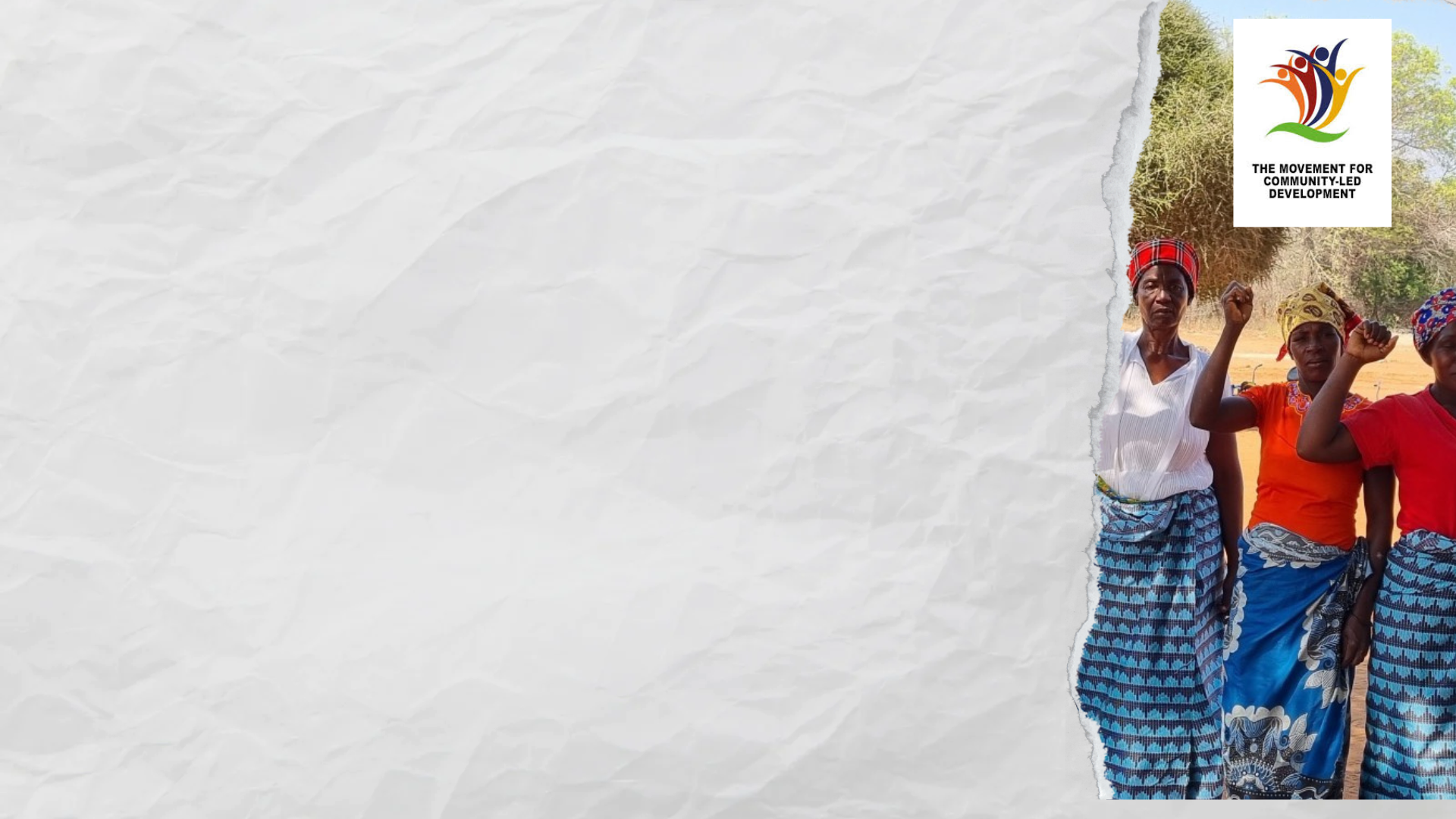
Movement for Community-led Development (MCLD)
(Benin, West Africa)
Context setting
Pascal Djohossou and Paul-Marie Houessou started from the observation that university students were going hungry. Not occasionally, not a few—hunger was a defining feature of student life at Adjarra College, a public institution serving over 7,000 students eight kilometers from Benin's capital. No campus canteen. No student housing. Token government allowances that arrive, if at all, at the end of the academic year. Stories of how students were choosing between textbooks and basic sustenance.
Through their storytelling work, they tested whether collecting and sharing authentic stories from students experiencing hunger could shift how decision-makers perceive the problem—from individual failure to systemic issue—and ultimately challenge the aid-worker narratives that have dominated how food security gets addressed in Benin.
Why now
The forces that created this situation sit around decision-making tables in Porto-Novo, eight kilometers away. The executive branch, parliament, the municipality of Adjarra, university leadership— created a campus yet left it without basic conditions. Meanwhile, since 2016, student unions have been systematically weakened by restrictions on speech and association, reducing their power to mobilize and express grievances to a helpless silence.
Deeper forces hold this in place: colonial structures that position international agencies as experts and local communities as beneficiaries. Economic systems that prioritize institutional relationships over community needs. Educational systems that teach students to accept problems as individual failures rather than systemic issues. The overall purpose of this work is to ensure that students' food problems are seen as what they are—systemic—rather than personal shortcoming.
What they tested
Pascal and Paul-Marie tested whether storytelling could shift who gets to define problems and design solutions. When university administrators hear a student describe choosing between buying textbooks and buying dinner, they understand the real issue in ways no policy brief can convey. When government officials learn that aid programs ignore how students actually live and eat, they start asking fundamentally different questions.
Their approach creates spaces where students' lived expertise can reach the people making decisions about their lives—facilitating conversations across power differences in ways that build trust rather than extract information. Crucially, they didn't bring everyone into the room at once. The work is carefully sequenced: first, storytelling circles where students build collective understanding among themselves. Only then, gradually broadening to include more system actors—local vendors, farmers, university administrators, eventually government policymakers. Each stage requires adjusting for power differences and pacing for greatest impact. Rushing this—or flattening it into a single "multi-stakeholder convening"—would collapse the very conditions that make authentic sharing possible.
The central tension they navigate: how do you balance the vulnerability required for authentic storytelling with the power dynamics that make that sharing risky for students? How do you build empathy and understanding without falling into "poverty storytelling" that reinforces aid narratives rather than challenging the systems that create the problems?
What's shifting
Students are building collective understanding of their experiences instead of accepting individual shame about food insecurity. System actors are beginning to see connections between their separate decisions that they couldn't perceive from their individual institutional positions. Local voices are starting to challenge aid-dominated problem definitions and assert authority over solutions.
What wants to emerge: a fundamental shift from aid-worker narratives to community-authored approaches. Credit systems aligned with student financial rhythms rather than institutional convenience. Procurement policies that embrace local food networks rather than excluding them. Support programs designed around how students actually live rather than how institutions assume they live.
Open questions
How can storytelling processes genuinely redistribute power rather than just extracting more sophisticated data?
What does it take to stimulate authentic storytelling—rather than just more inclusive consultation processes—when the people sharing stories have the least institutional power and the most to lose?
Connected to these learnings
Selected connections
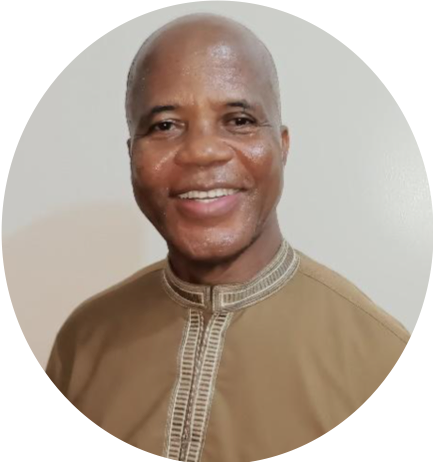
Pascal Djohossou
Coordinator, Movement for Community-Led DevelopmentApproach to work
Pascal Djohossou works alongside communities to support rural development that lasts. He cares deeply about approaches that are practical, locally rooted, and led by those most affected. Since 2017, he has coordinated MCLD–West Africa, helping, in collaboration with National MCLD Associations, to shape and support needed transformations towards community resilience.
Trained in forestry management in Benin, Côte d’Ivoire, and France, Pascal began his career in public service, working directly with forest conservation and reforestation efforts. Over time, his work expanded to supporting grassroots leaders, NGO staff, and government colleagues to strengthen how forests and soils are preserved and restored. From 2001 to 2019, he served as Country Director of The Hunger Project–Benin and later as a Regional Director, focusing on community-led rural development and policy work.
Pascal brings the conviction that students' food problems are systemic issues, not individual failures—and advocates for the need to design processes that reveal these without flattening the complexity. He understands that storytelling across power differences requires careful sequencing: you don't bring everyone into the room at once. And he holds a long view of how colonial structures continue to position international agencies as experts and local communities as beneficiaries, and what it takes to reverse that.
Beyond the work
Born in the Mono region of Benin, Pascal is also passionate about photography, and poetry. He is married and the father of three children.
Selected connections
Fellows
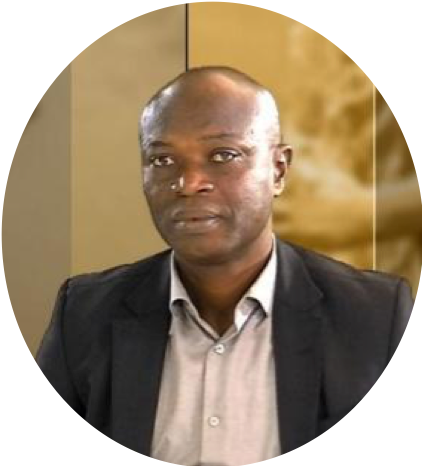
Dr. Paul Marie Houessou
Assistant Professor of African Studies, the University of Abomey-Calavi
Approach to Work
Paul-Marie Houessou grew up in urban Togo and rural Benin and has spent much of his life listening to how people explain their own realities and telling stories on TV, radio and through newspapers. He cares deeply about how knowledge, culture, and everyday experience shape social change, and he works to make research accessible beyond academic spaces.
As a scholar of African studies and director of a research, arts, and language institute, Paul-Marie brings together research, creative expression, and public dialogue. Earlier in his career, he worked as a radio journalist, using storytelling to share how rural communities were addressing food security and poverty in their own words. It was during this time—more than 20 years ago—that he began collaborating with Pascal Djohossou, a partnership grounded in mutual respect for community-led action.
Whether through teaching, writing, or media, Paul-Marie focuses on amplifying local voices and connecting ideas to real life. His work reflects a belief that lasting change begins when people are heard, understood, and trusted as experts in their own lives.
Paul-Marie brings a scholar's rigor paired with a journalist's instinct for whose voice is missing. He understands the difference between storytelling that reinforces aid narratives and storytelling that challenges the systems creating the problems—and he designs for the latter. He also brings two decades of partnership with Pascal, grounded in the conviction that research and action belong together, not in separate rooms.
Beyond the work
Born in Lomé, Républic of Togo, Paul-Marie is also a political and economic analyst (a popular TV pundit), a top class interpreter (French > English and English > French) , a film director, and a Manchester United fan. He is also a certified trainer of trainers on the participatory Community-Led Development assessment tool designed by MCLD and partners ( https://mcld.org/download-the-scoping-tool/ ). He is married and the father of four children.