
Casatarantula
(Santa Marta, Colombia)
Context setting
Nicolas van Hemelryck and Clare Weiskopf started from an observation that legal briefs and policy papers couldn't capture: the same mountain exists in four different realities simultaneously. For Kogui spiritual leaders, it's sacred territory governed by natural law and ancestral relationships. For real estate developers, it's an investment opportunity governed by property rights. For town officials, it's historical heritage that brings tourism revenue. In the shadows, illegal groups dispute drug trafficking routes. Each story justifies completely different outcomes—protected status versus mining permits versus cultural monuments. Whoever controls the narrative eventually controls the territory.
Through the development of the documentary film YULUKA, they are testing whether film can capture something that traditional advocacy cannot—the actual moment when narrative choices become material choices. The project follows the creation of the first theatrical production in Kogui history, a political and spiritual decision by eleven young people, guided by their mamos and two renowned theatre directors, to break centuries of isolation and publicly share their message of conservation and balance through performance.
Why now
Traditional advocacy and legal challenges suggested that the question isn't just who owns the land legally, but whose version of reality gets to define what land even is.
Right now, in Colombia's post-conflict period, land relationships are being redefined. You can see competing worldviews colliding in real time. Colonial legal structures privilege written contracts over oral territorial knowledge that spans millennia. Economic systems reward extraction and development over stewardship and protection. Cultural institutions can either amplify Indigenous voices or turn them into artistic material for non-Indigenous consumption—often while believing they're being helpful.
The Kogui's decision to create theater is itself a response to the apparent ineffectiveness of words. When decades of saying "this is sacred" hasn't stopped the mining permits, you try something else. Performance. Presence. A different way of making the invisible visible.
What they tested
Nicolas and Clare tested whether documentary film could reveal the meta-story that theater alone was not—how decisions about artistic representation directly mirror decisions about territorial control. Who gets veto power over the script? Whose version of history gets performed? These aren't just creative decisions. They're practice runs for political decisions.
The film is intended to experiment with collaborative and polyphonic forms of storytelling, challenging the traditional "hero's journey" and embracing contradiction and plurality as creative engines. Multiple worldviews coexist without one overpowering the others. The process of reaching agreement—with all its tensions and failures—is as important as the outcome.
Central to this is the Kogui concept of Yuluka—the continuous pursuit of dynamic equilibrium, of living in respect with all that exists. More than simply "reaching agreement," Yuluka is the art of restoring balance when it is lost, of dialoguing with difference so that life may continue to flow. The film asks: can this principle be brought into cinema? Can film become a space of genuine encounter between radically different cultures, or is it inherently bound to reproduce Western logics of power and appropriation?
A singular challenge is how to translate the Kogui's profound connection to territory and spirituality into cinematic language—avoiding exoticism while privileging emotion, presence, and attentive listening. How do you film without repeating cultural extractivism? How do you narrate a collective process without falling into simplification or individual protagonism?
What's shifting
Patterns are emerging that go beyond this specific case. "Empty land" stories consistently lead to extraction permits. "Sacred territory" stories consistently lead to protection requirements. "Historical heritage" stories consistently lead to tourism development. These aren't coincidences—they're systematic relationships between narrative frameworks and policy outcomes.
What's becoming clear is that narrative control and territorial control aren't separate battles—they're the same battle happening on different fronts. When Indigenous leaders fight for the right to tell their own story, they're also fighting for the right to govern their own territory.
The filmmakers are also being changed. The project pushes them to reexamine their own structures of power, narrative, and representation. Their biggest challenge is resisting simplification—neither romanticizing Kogui culture nor victimizing it, neither casting themselves as saviors nor denying their responsibility.
YULUKA is not only about this territory. It is about how stories travel through institutions, how they harden into policy, and how they reshape the world. The land is not scenery—it is witness. And cinema becomes a space where systems are invited into the room, where stories are allowed to change, and where the unexpected can still emerge.
Open questions
How can collaborative system storytelling processes actually interrupt colonial patterns rather than just making them more inclusive?
What are the specific mechanisms by which stories about land influence how land is governed and cared for? And where in that process can interventions be most effective?
Connected to these learnings
Nicolas van Hemelryck
Co-Founder Casatarantula
Approach to Work
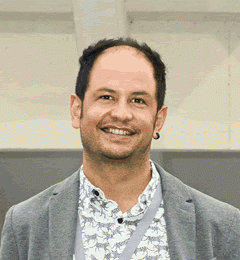
Nicolas van Hemelryck is a filmmaker, photographer, and architect who believes storytelling shapes how people understand themselves and the world around them. His work is driven by curiosity about human behaviour, collective memory, and the stories we pass on—often quietly—across generations. He approaches filmmaking as a shared process, one rooted in trust, listening, and care.
Nicolas co-founded Casatarantula and the DOC:CO distribution and promotion agency with Clare Weiskopf. Together, they support documentary filmmakers and long-term storytelling projects that value depth over speed. Living in Santa Marta, Colombia, Nicolas is especially committed to working alongside Indigenous communities, supporting them to tell, protect, and archive their own stories using both ancestral and contemporary forms.
Whether behind the camera or working with others, Nicolas focuses on creating spaces where stories can unfold honestly. For him, filmmaking is less about answers and more about meaning-making, connection, and responsibility.
Nicolas brings the discipline of asking how to film without repeating cultural extractivism—and the willingness to sit in that question without resolving it too quickly. He holds the understanding that decisions about artistic representation directly mirror decisions about territorial control: who gets veto power over the script is practice for who gets veto power over the land. And he brings the commitment to polyphonic storytelling, where multiple worldviews coexist without one overpowering the others.
Beyond the work
I love spending time with my family and friends, experimenting in the kitchen, and losing myself in music. I ground myself every day through meditation and yoga and I find connection in nature—swimming in the ocean, cycling up mountains, or hiking through wild landscapes. I prefer to travel the world slowly, savoring each place through its local food and culture.
Fellows
Clare Weiskopf
Co-Founder Casatarantula
Approach to Work
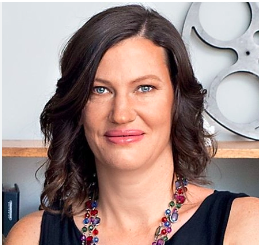
Clare Weiskopf is a filmmaker who uses storytelling to explore difficult, often unspoken subjects with care and closeness. With a background in journalism, she is drawn to intimate stories that ask fundamental questions and invite emotional honesty rather than easy conclusions. Her work is grounded in trust, patience, and deep listening.
Clare co-founded Casatarantula and the DOC:CO distribution and promotion agency with Nicolas van Hemelryck. Together, they support documentary filmmakers and long-term creative processes that respect the people and communities at the heart of each story. Based in Santa Marta, Colombia, Clare is especially committed to working with Indigenous communities to support intergenerational storytelling and the preservation of cultural memory.
Clare approaches filmmaking as a relational practice. She cares about how stories are told, who tells them, and who they serve. At the centre of her work is a belief that honest stories—told with care—can open space for reflection, connection, and change.
Clare brings the insistence on resisting simplification—neither romanticizing nor victimizing, neither savior nor bystander. She holds the tension of portraying true complexity: the achievements and the limits, the moments of harmony and of rupture. And she brings a journalist's discipline to the question of how stories get told, and whose version of reality gets to shape what comes next.
Beyond the work
Beyond her work, Clare is grounded by motherhood, dance, and a growing commitment to slowness and silence. Living between the sea and the mountains, in close contact with nature, has sharpened her attention and informed her way of telling stories—with patience, depth, and care.