The Detroit Education Narrative (DEN) Collective
(Detroit, Michigan)
Context setting
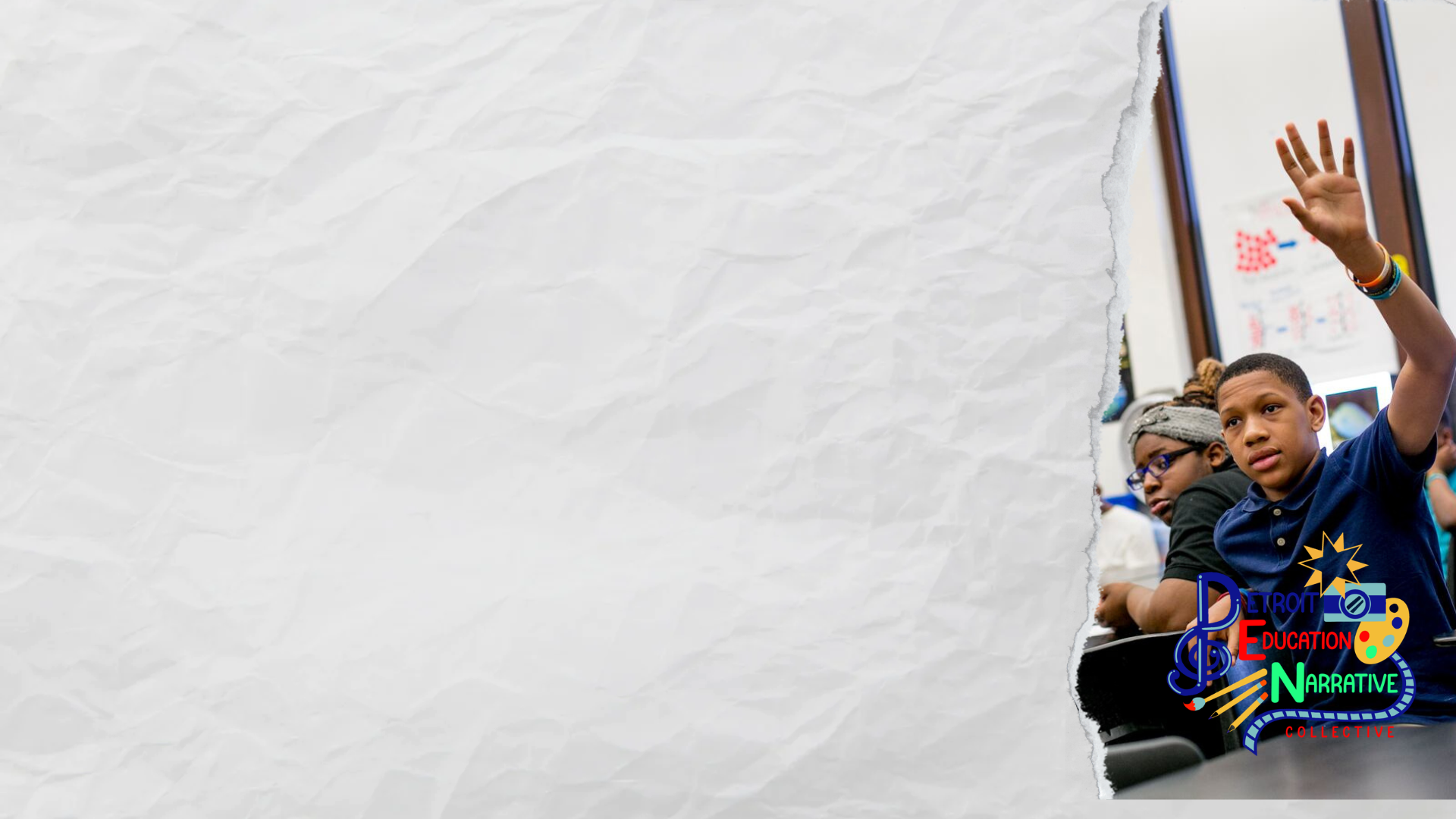
Natalie Fotias and Imani Foster started with a problem that data couldn't solve. Information about Detroit's education challenges was disempowering Detroiters. The story of what was happening in Detroit schools, and why, was largely being told by outsiders, leading to policies that punished students and teachers while further distancing them from education decisions that have a profound impact on them. Through the Detroit Education Narrative Collective, they tested whether artists could close that distance. Not by creating content for campaigns or illustrations for policy briefs, but by being treated as partners in systems change—bringing together storytellers across art forms to tell the story of Detroit’s education system. The DEN Collective stories analyze fractures in the system, present community-grown solutions, and deploy the narrative that Genius Comes From Detroit. The Collective’s work is being shared across communities and power centers to put Detroiters’ voices in the forefront.
Why now
Detroit's education challenges mirror and magnify those in urban and post-industrial cities nationwide: disinvestment, systemic racism, fragmented governance.
Education is a rallying issue across Michigan—no longer seen as a "Detroit problem" but reaching every corner of the state. There's growing recognition that community voices must shape education policy rather than just receiving it. Storytellers with deep connection to the education system are essential here. They can expose the root causes and the transformational solutions to create an effective, student-centered education system.
What they tested
Natalie and Imani tested whether investing in storytellers—rather than stories—could produce deeper, more durable change. They brought together filmmakers, visual artists, writers, and experiential artists connected to Detroit's education system. For one year, the collective met monthly to learn from field leaders, co-design a shared narrative frame, and create work in forms that made sense for their own practice.
There were no prescribed outputs. Some stories were presented as podcasts, video series, full-length films, and photo exhibitions. Some involved supporting young children to tell the story of their genius through creative forms. Others brought community members into conversation and action.
They held a one-night exhibit to showcase the stories and are now working on strategies to identify and reach additional target audiences.
What's shifting
Storytellers are creating work that speaks simultaneously to local experience and national patterns, helping people understand what’s really happening in the lives of today’s students, what their ambitions are, and how schools can better support them. These stories also show the connection between daily education experiences to policy decisions made in distant capitols. Something else is shifting too: how participants understand change itself. One collective member intends to run for public office. Another started a youth program. Others are looking to join a film festival circuit. The work opened something in them—not just new skills, but new orientation toward what's possible.
Open questions
What are the specific storytelling mechanisms that best leverage powerful artistic expression for concrete systemic change?
How do you design storytelling interventions that create genuine dialogue across difference rather than just preaching to converted audiences?
How do you ensure genuine community agency through stories about the system while engaging with power structures that communities may not trust or want to legitimize?
Connected to these learnings
Fellows
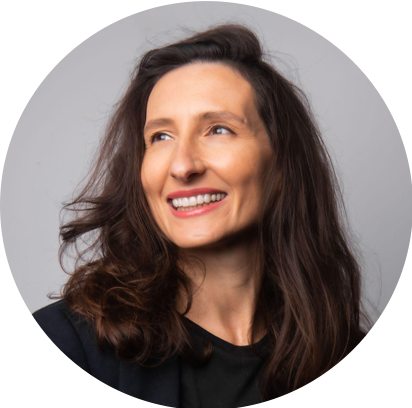
Natalie Fotias
Vice President of Communications, The Skillman Foundation
Approach to Work
Before working in foundations and nonprofits, Natalie Fotias worked in film and video—paying attention to youth culture, countercultures, identity, and how people see themselves reflected (or not) in the stories around them. That instinct has stayed with her.
Today, Natalie works inside a foundation, holding responsibility for how an institution speaks, what it amplifies, and when it chooses to step back. She thinks carefully about voice—whose stories get elevated, who decides, and how they are heard. She is especially attentive to how institutional storytelling can build connections and community.
Natalie brings a maker's eye for story, emotional truth, and resonance—and a journalist's instinct for clarity and accountability. She holds experience leading campaigns, navigating media and public attention, and translating between community realities and cultural mindsets.
Beyond the work
Natalie reenergizes by walking, hiking, and lifting heavy things. She enjoys sunny weather, steep hills, an eclectic mix of music, and quality time with her husband and son.
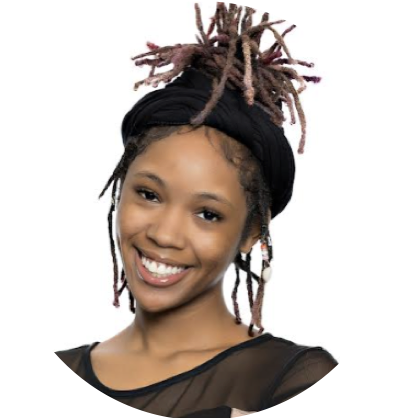
Imani Foster
Communications and Research Director, 482Forward
Approach to Work
Imani Foster is a native Detroiter from the city’s East Side. She began organizing for education justice at 15 years old alongside 482forward, an education organizing coalition in Detroit. Foster learned at an early age how deeply narratives shape what people believe and works hard to expand what’s possible for young people in Detroit and similar urban communities..
Today, Imani works with the same education justice organization to help shift the perception of Detroit students, educators, families and schools. Her approach is shaped by her own experiences growing up as a Black girl in a Black city—experiences marked by stereotypes, erasure, expectations to shrink, and other negativities because of her Black girlhood. In college, studying African American studies and Black feminist thought provided her with language for what she had lived and tools to challenge it.
In 2023, Imani launched H.E.Y Black Girl, a program for Black girls from Detroit to practice healing, empowerment, and yoga. Her work is driven by a commitment to creating the spaces she once needed—spaces where Black girls are seen, believed, and celebrated as they are.
Beyond the work
Outside of work, I’m very passionate about the healing that needs to take place within my community. Whether it be through meditation, music, yoga, radical love, reading, etc., I remain committed to creating sacred spaces for my community to be able to rest, heal and grow together.