The 5 Qualities of
Transformational Systems Change
A simple truth of systems is that they are made up of people. Once we recognise that simple truth, it becomes obvious that a system’s structures will continue to produce the same outcomes until we catalyze profound shifts in the ways of working and ways of relating among the people who make up that system.
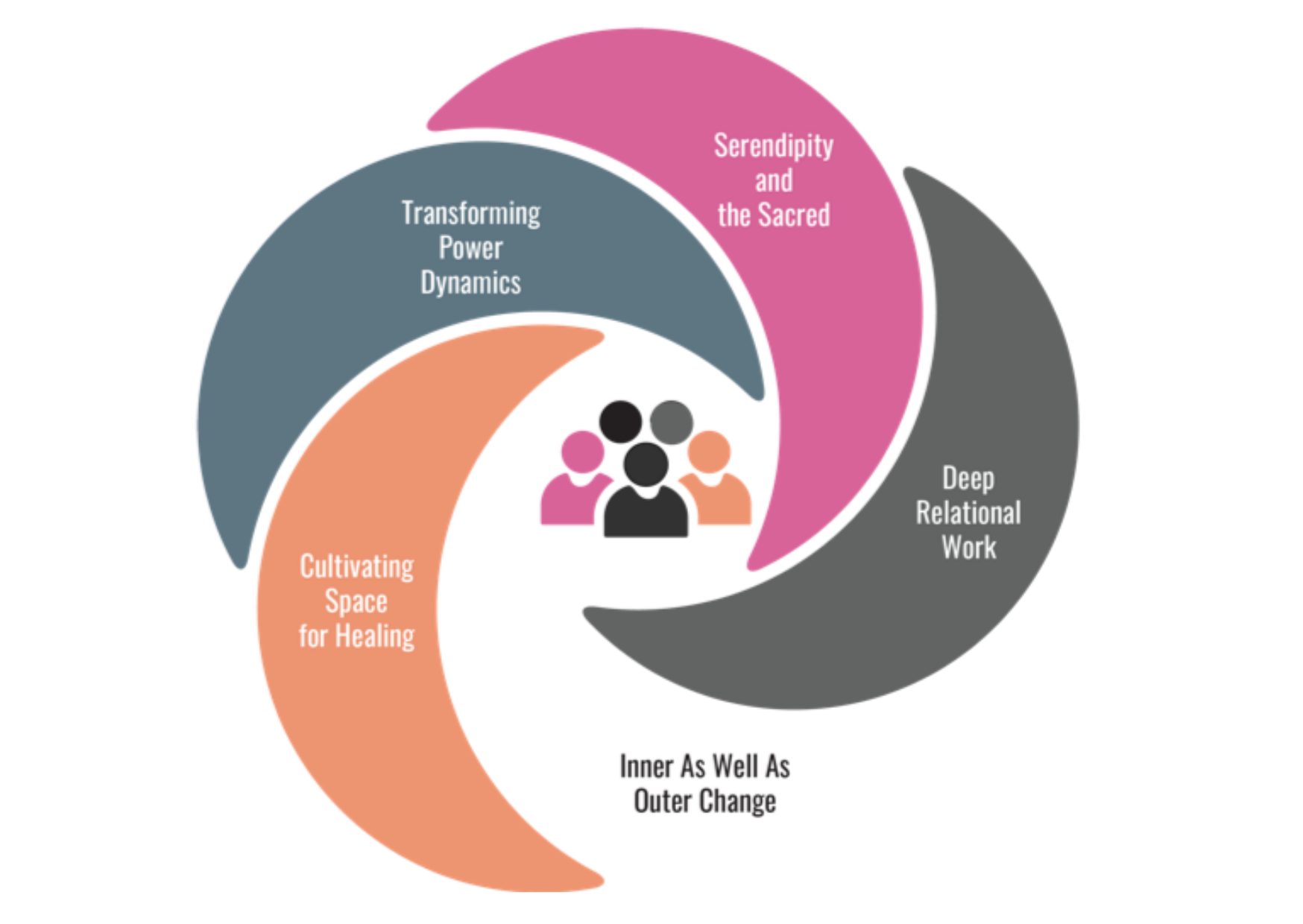
A growing number of social change leaders are trying to do exactly that, due to a growing recognition that structural changes alone will not transform systems towards more just and equitable outcomes. Collective Change Lab helps social change practitioners and philanthropists experiment with transformative practices in their collaborative systems change efforts, which tend to have five qualities in common;
Deep relational work: Establishing spaces in which groups feel interrelatedness and generative potential
Transforming power dynamics: Increasing collective power through expanding collective agency and shared values
Cultivating space for healing: Supporting people in sharing trauma(s) and working towards community healing
Serendipity and the sacred: Welcoming the sacred, love and emergence into the work
Inner as well as outer change: Changing oneself as a means to create change in the world
Learn more about the framework in our article in the Stanford Social Innovation Review:
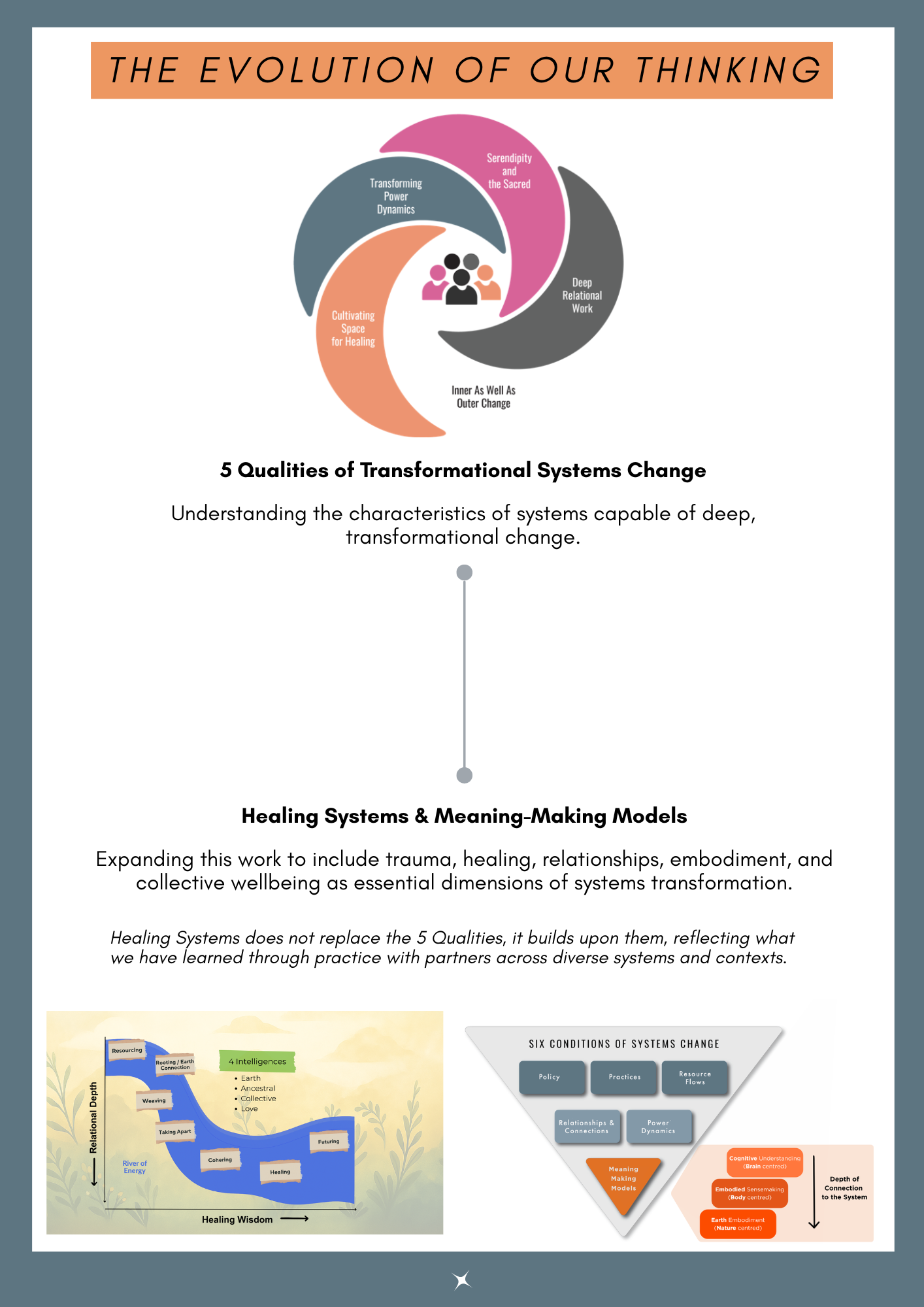
The Healing Systems framework builds on years of learning about what enables transformational systems change. Our earlier work, The 5 Qualities of Transformational Systems Change, identified the conditions that help systems shift toward greater equity, resilience, and possibility.
Through continued practice with partners around the world and through our work on trauma, healing, embodiment, and collective transformation, we came to recognize that these qualities, while essential, are strengthened when systems also attend to the human experiences that shape them. Healing Systems extends this earlier framework by integrating healing as a foundational dimension of lasting systems change.
Explore the Healing Systems Journey Framework ↓
Explore the Six Conditions ofSystems Change & Meaning-Making Model ↓